MITIGATION
Radon Mitigation in Columbia, MO
A radon mitigation system reduces radon levels in your home by drawing the gas from beneath the foundation and venting it safely outside.
What is radon mitigation?
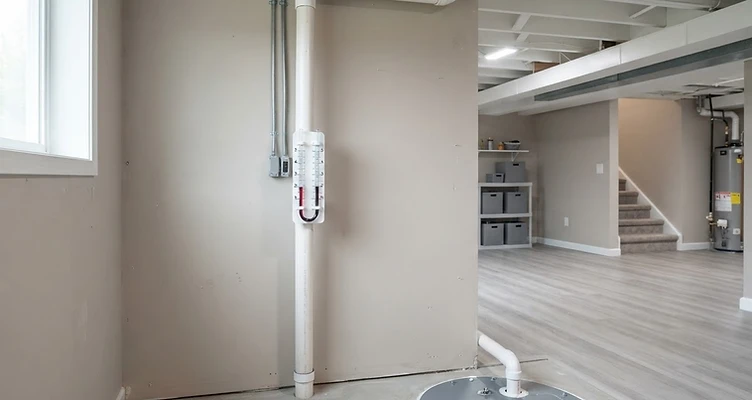
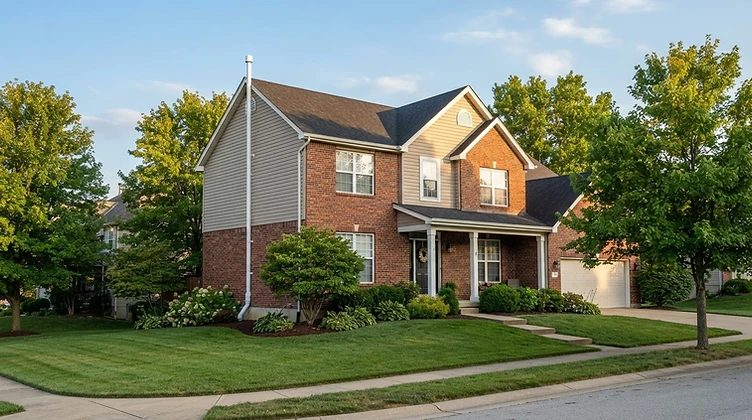
Radon mitigation is the process of reducing radon gas levels in a home. The most common method is called sub-slab depressurization. A pipe is installed through the foundation floor, connected to a fan, and routed to the exterior where radon is vented above the roofline—before it can enter your living space.
The fan runs continuously, creating a slight vacuum beneath the floor that pulls radon gas up through the pipe instead of allowing it to seep into the home. The system is monitored with a manometer, a simple pressure gauge mounted on the pipe, so you can confirm the fan is working at a glance.
A properly installed mitigation system can reduce radon levels below the EPA action level of 4.0 pCi/L, and often below 2.0 pCi/L. Missouri DHSS recommends confirming the result with a post-mitigation test after installation.

SYSTEM TYPES
Mitigation for every foundation
The right system depends on your home's foundation type. A qualified professional will recommend the best approach for your situation.
Basement systems
A pipe is routed from beneath the basement slab through the home or along the exterior, venting above the roofline.
Crawl-space systems
A vapor barrier is sealed over the crawl-space floor, and a fan draws radon from beneath the barrier.
Slab-on-grade systems
A suction point is installed through the concrete slab, with the pipe routed to the exterior.
WHAT TO EXPECT
The mitigation process
From assessment to post-mitigation testing, here is what happens during a typical installation.
Assessment
A professional evaluates your test result, foundation type, and home layout to determine the best system design.
Installation
A suction point is created, the pipe and fan are installed, and the vent is routed above the roofline. Most installations take a single day.
Sealing
Cracks in the floor, the sump pit, and other openings may be sealed to improve the system's efficiency.
Post-mitigation testing
A follow-up test confirms radon levels have been reduced below the action level.

1 day
Typical installation time
4.0
EPA action level (pCi/L)
2 yrs
Recommended retest interval
$500–$2,500
Typical cost range (MO DHSS)
READY TO ACT?
Request a mitigation assessment
A local radon professional can evaluate your home and recommend the right system for your foundation.